Monday, 23 August 2021

AU REVOIR LES ENFANTS


 One of the great films about childhood and certainly one of Louis Malle's very finest films, "Au revoir les enfants" is set in a boy's boarding school in German-occupied France during World War Two and tells of the friendship that develops between two boys, one a well-to-do French boy and the other a Jew, hiding out in the Catholic run school and whose identity is a secret from all but the teaching staff.

It's deeply moving as you can imagine while also working as a wartime thriller, (it's one of a handful of French films to deal with those who were collaborators), but it's in the minutiae of everyday life within the school and in the interaction between the boys, all superb and all superbly directed by Malle, that the film really scores. The adults are mostly in the background; the children are the stars here and both Gaspard Manesse and Raphael Fejto as the two boys at the centre are outstanding. A classic of French cinema that demands to be seen.

Sunday, 15 August 2021

THE BALLAD OF BUSTER SCRUGGS


 I guess it was inevitable that the Coen Brothers would do a portmanteau picture, little pieces resembling short stories or comic strips brought to life. Wasn't that what "Raising Arizona" was, a Roadrunner cartoon with actors? Of course, anyone can do a portmanteau picture and add nothing to the segments other than a fundamental blandness. The Coens, however, have distinguished themselves from the beginning with a style unlike that of any of their contemporaries. You can recognise a Coen Brother's film from a distance. In the end, they may all look and sound the same but that's their signature just as we know a Fellini or a Bunuel or a Hitchcock.

"The Ballad of Buster Scruggs" is six tales of the Old West; part pastiche, part homage, part realism, very funny certainly but philosophical and deeply moving, too. The link lies in the Coen Brothers' style and the depth of feeling they bring to the individual pieces. The title comes from the first story, a surreal comedy-western inspired in part, perhaps, by Mel Brooks as a vehicle for the great Tim Blake Nelson as a singing cowboy who isn't quite what he seems. It's very funny and is closest in style to "Raising Arizona".

The second story is a gorgeous black joke about an incompetent bank robber played by James Franco in dead-pan style. The third segment, "Meal Ticket" is virtually a two-hander and is a small masterpiece of visual storytelling with wonderful performances from both Liam Neeson and a remarkable Harry Melling and it shows the Coens can do 'serious' impeccably and the same can be said for the fifth and longest segment, "The Girl Who Got Rattled", a tale of the Oregon Trail that again never goes where we expect it to and taken on its own is one of the very best things the brothers have ever done.

If the other two stories don't quite measure up they are still remarkable in their intelligence and are beautifully played. The first is really a one-man show for Tom Waits while the closing segment is like something Guy De Maupassant might have written and the whole thing is stunningly photographed by the great Bruno Delbonnel. Made by Netflix it was rumoured that the film was originally to be a television series but now it seems it was never intended to be anything other than what it is and surely these combined stories must rank with some of the brother's very best work. I look forward to revisiting them frequently.

Thursday, 5 August 2021

ALL THAT HEAVEN ALLOWS


 Like so many '50's movies that came out of Hollywood "All That Heaven Allows" was dismissed by the critics as just another 'women's picture' and so much romantic mush before being discovered by the Cahiers crowd. It's now rightly regarded as a masterpiece and one of the most biting critiques of American manners ever put on film. Fassbender paid tribute to it in "Fear Eats the Soul" and Todd Haynes virtually remade it as "Far From Heaven".

In this version, a widow in early middle-age, (Jane Wyman, superb), falls in love with her younger gardener, (a surprisingly good Rock Hudson), causing no end of scandal in the narrow-minded small town in which they live. It's a film about class and prejudice and the passing of time and, of course, it's also a great love story. For producer Ross Hunter, it probably was just 'romantic mush' but director Douglas Sirk turned into something genuinely subversive, finding the worm in the apple, (an what an apple, photographed by the great Russell Metty in colours that seem at times positively psychedelic).

Haynes, of course, took it a step further. The gardener was black and the woman at the centre had a husband who was homosexual, (was this a direct reference on Haynes' part to Hudson's homosexuality or was it simply that by the time "Far From Heaven" came out such things were no longer taboo?). Of course, it's also easy to take it at face value but read between the lines, paying attention to Sirk's 'mirror' shots, (is what we're seeing simply a reflection of a way of life?), and you will have found one of the great American films of its time.

Wednesday, 4 August 2021

EMBRACE OF THE SERPENT


 "Embrace of the Serpent" is one of the most astonishing films you will ever see. It could be a documentary, though it clearly isn't. It's scripted and based, we are told, on the diaries of Theodor Koch-Grunberg and Richard Evans Schultes and it's acted, magnificently in the case of Nilbio Torres and Antonio Bolivar playing the same character at different stages of his life, (neither is a professional actor and this is the first time they have appeared in a film). It is also breathtakingly well photographed in black and white in the Amazon region where it is set. It's an adventure story, an ethnographic study, a film about friendship, an account of a journey and an attack on organised religion and it's a masterpiece.

It begins in the past and then moves to 'the future' as we meet its four central characters, one of whom, Karamakate, is as I've said, played by two different men and throughout its two hour running time it moves back and forth over an unspecified period of years. A seriously ill explorer, Theo, is brought upriver by his Indian friend, Manduca, to a lone shaman, Karamakate, to be healed. At first the shaman is reluctant to help him until he learns from Theo that members of his tribe are still living in the jungle and together the three embark on a river journey in search of both a healing plant and Karamakate's people. Years later another explorer, Evan, seeks out the same shaman and the journey is, in some ways, repeated.


With its jungle-river setting, its strange river-dwelling communes and its constant threat of violence it's like a pared down version of "Apocalypse Now" but without Coppola's bombastic flourishes. The director is Ciro Guerra but it never feels like it is being directed; every incident, every moment of this great film, feels like it's happening naturally as if we've slipped into the lives of these characters without having any right to be there. A phenomenal achievement, both technically and artistically, under no circumstances should this film be missed.

Sunday, 1 August 2021

JINDABYNE


 Ray Lawrence has only made three films in a career that began in 1985 with "Bliss" which was enough to get him noticed but he didn't direct again until 2001 when he made "Lantana" and five years later he made "Jindabyne". He's done nothing since but on the strength of "Lantana" and "Jindabyne" alone he should be considered among the best directors to have emerged in the last forty years. "Jindabyne" is based on a Raymond Carver story, the same one Robert Altman used in "Short Cuts", but Lawrence has expanded it so that it now deals with issues beyond those in the original story.

The central premise is the same; four men on a fishing trip find the naked body of a young woman in the river but instead of reporting it straight away, they go on fishing, having tied the body to a tree and naturally their actions have devastating consequences both for the men and their families. But Lawrence has set his film in Australia and the girl, who has been raped and murdered, is Aboriginal and that fact alone has consequences.

Superbly written, directed and acted, (in particular by Laura Linney and Gabriel Byrne), this is a genuinely disturbing film and, while anchored very specifically in a certain place, its themes are universal. It was a critical success at the time but didn't prove popular with the public and is now thought of largely as a cult movie. Seek it out; I think you will astonished.

Friday, 30 July 2021

FUNERAL PARADE OF ROSES


 An underground art-house hit that is said to have influenced Stanley Kubrick when he came to make "A Clockwork Orange", "Funeral Parade of Roses" has built up a considerable reputation over the years and since it deals with the lives of a group of trans bar-workers in Japan, has also become something of a gay classic. It's mostly plotless, more a series of fragments built around the character of Eddie who works as a hostess and is played by Peter who was also in Kurosawa's "Ran" and it's filmed by director Toshio Matsumoto as a kind of homage to black and white gangster flics filtered through the gaze of someone like Godard and it's as much about the process of making a movie as anything else. It's certainly one of a kind and very much an acquired taste. Brilliant, indlugent, pretentious; it's all of these but at least it's never boring.

RUBY GENTRY


 Another of King Vidor's hot-house melodramas about another girl from the wrong side of the tracks who marries on the rebound while still carrying the torch for the bad apple who threw her over in the first place. Jennifer Jones is "Ruby Gentry", pouting and pushing her ample bosom in the faces of all comers, Charlton Heston is the heel she pines after and Karl Malden is the nice, if somewhat overly jealous, widower she marries.

It's just the kind of sow's ear that Vidor was expert in turning into a silk purse; style oozes from every frame and both Jones and Malden are excellent. Even Heston, playing a bad boy for a change, passes muster. Of course, hysteria is never far from the surface and at just eighty-two minutes there's a lot of plot to cram in. What might have been just tawdry in the hands of a lesser director here becomes something of an American tragedy.

Monday, 26 July 2021

COLOR OUT OF SPACE


 OK, it gets progressively sillier as it goes along and by the time we reach the apocalyptic climax Richard Stanley's "Color Out of Space" has stretched our credulity to breaking point but until then, as sci-fi/horror flics go, this has all the makings of a cult classic. It's based on a H. P. Lovecraft story and centres on a family of five whose remote forest home, (somewhere in the United States though the movie was made in Portugal), is hit by a meteor, complete with the requisite aliens that such movies have to have but unlike the big sci-fi disaster films of the past this is a decidedly low-key affair that is genuinely creepy in the best sense, at least until Stanley pulls out all the gory stops.

A fine cast, headed by Nicolas Cage, Joely Richardson and very promising newcomer Madeleine Arthur keep things fairly realistic for most of the running time and by centring on a small group of people, Stanley is able to build the frighteners very nicely. Of course, you won't take any of it seriously but there are enough nightmare moments to make this one of the best sci-fi/horror hybrids of recent years and as Criswell might have said in "Plan 9 from Outer Space", 'Keep watching the skies'.

Sunday, 25 July 2021

THIS COULD BE THE NIGHT


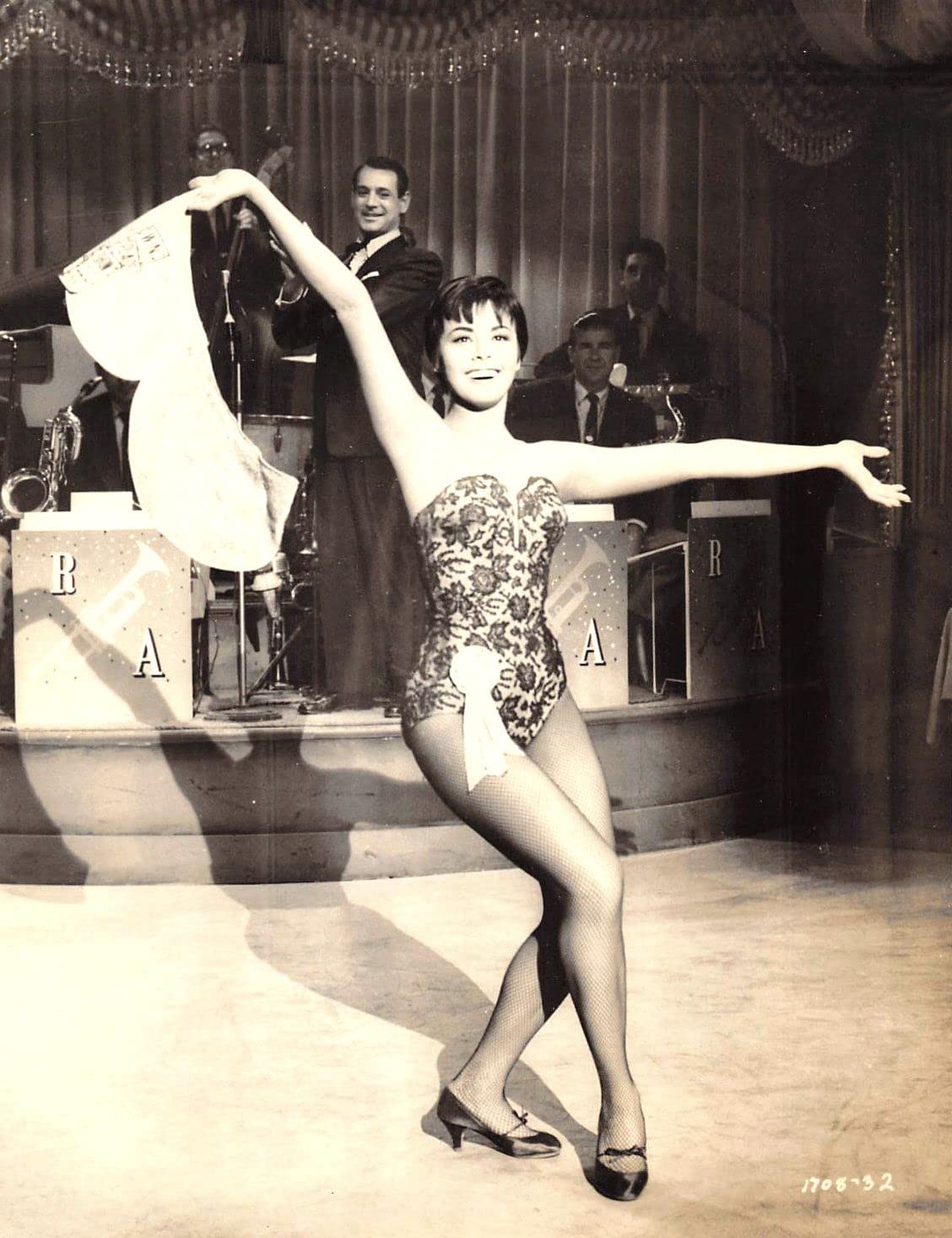
 Not quite a comedy, a drama or a musical but something of all three, "This Could Be the Night" is one of the Robert Wise movies that seems to have slipped off the radar which is a pity as it's actually very entertaining. It's certainly got a great cast. Jean Simmons is the schoolteacher who gets a part-time job as secretary to nightclub owner Paul Douglas but doesn't hit it off with his partner, Anthony Franciosa...at least initially. Five minutes in and you can see exactly where this movie is headed but a first-rate supporting cast, (Joan Blondell, the great Julie Wilson, Neile Adams, J. Carrol Naish, Rafael Campos), ensure a pleasant ride. Throw in Ray Anthony and his orchestra and some good musical numbers and what's not to like.

Monday, 12 July 2021

THE SHOES OF THE FISHERMAN


 My heart didn't exactly leap for joy when I saw that Michael Anderson was the director of "The Shoes of the Fisherman". At best, Anderson was a reasonable jobbing director whose main claim to fame was that he helmed that elephantine Oscar winner "Around the World in 80 Days", (and I felt I was there for everyone of them), as well as "The Bum Dusters", sorry "The Dam Busters", (you can tell I'm not a fan), and yet his fairly epic screen version of Morris West's novel actually works. Of course, with a more incisive and intelligent director it could have been something really special but even with Anderson at the controls it's a smart, hugely entertaining and ultimately moving picture with a good all-star cast all acquitting themselves admirably, (Anthony Quinn is excellent as the reluctant Pope and there's great work, too, from Vittorio De Sica, Leo McKern and especially Oskar Werner as various members of the clergy.

In case you don't know, the fisherman in question was Saint Peter, acknowledged to be the first pope and all subsequent popes are said to walk in the shoes of the fisherman. West's book is about the first Russian pope who does something very radical in order to both feed the world's poor and prevent World War Three. Of course, with a topic as topical and as controversial as this the book was a huge bestseller and the film version did make money. It's not a great film, (it's actually overly simplistic), and Anderson was never a subtle enough director to add depth though the scenes dealing with the Conclave of Cardinals and the election of the new pope have a documentary-like brilliance rare in a major feature film. Ultimately, this handsome looking film does exactly what it says on the tin and for that alone we should be more than thankful.

Monday, 5 July 2021

THE LIFE AND TIMES OF JUDGE ROY BEAN


 It may not be a late masterpiece but John Huston's movie "The Life and Times of Judge Roy Bean" isn't just one of his most underrated films but also one of his best. It's a picaresque western, (the title is a bit of a giveaway), with an even more laconic than usual Paul Newman in the title role with a supporting cast of 'guest stars' including Huston himself. It also introduced a young Victoria Principal, (Pam Ewing herself), and had Ava Gardner pop up as Lily Langtry.

Of course, Huston doesn't take any of it seriously. This is a blackly comic western, beautiful written by John Milius and with dialogue ripe for quoting, done as a series of set=pieces built around that terrific cast and, of course, it owes nothing to any other vision of Judge Roy Bean we may have seen, (Newman's about as far removed from Walter Brennan as it's possible to get). As an opening title says, this isn't the way it was but it's the way it should have been and it's a total delight.

THE BRIDE!

 Maggie Gyllenhaal's "The Bride!" wasn't a critical nor a commercial success and come awards time it's not likely to f...